skip to main | skip to sidebar
  • Return to Mr Overon's Tarot Reading Services
moon data


Follow along on Social Media

Archive of my blog

  • December 2019 (1)
  • October 2019 (2)
  • August 2019 (18)

Search This Blog

Mr Overon's Journal

a working journal for Mr Overon's Tarot Reading Services located at https://www.mroveron.com Mr Overon provides a full range of services from tarot readings and spell casting, to spiritual services and peer counciling. Real, Honest, and sincere, readings await.

spiritual toxic waste

Friday, August 23, 2019


Although it’s rare, there are some people who operate without any conscious form of spirituality. This usually dulls their life and they seem to inhabit a world without much meaning. For those of us with a spiritual element, this would be a living hell. Fortunately, most people do have a spiritual side to them.

That’s not to say they necessarily are religious. Being spiritual means the person has some concept about how the universe works and how they relate to it. It doesn’t have to contain any Maker or be complicated, it only needs to be a model that works for the person and provides some kind of relationship between that person and the way they perceive world around them. Almost by definition, this must include a certain mystical part because there will always be the unknown factor in everybody’s universe.

Having spirituality is an important part of anyone’s mental and emotional health but having one doesn’t guarantee that health. There are some forms of spirituality that are toxic to a person as well as causing a great deal of pain and trouble for everyone around them.

It’s easy to point to another person’s spirituality and say it’s toxic. In fact, there is a long history of people doing exactly that. And not all the examples in that history would be classified as religious wars. But it would seem that every war is at least partly based on the idea that ‘we’ are right and ‘they’ are wrong, ‘we’ have God on our side and ‘they’ don’t, ‘we’ have the spiritual and moral high ground and ‘they’ don’t.

Whenever you think about how another person interacts with the universe, you’re looking, at least in part, at their spirituality. One may not agree with another’s viewpoint, but that is not sufficient for calling it toxic. Unfortunately, that hasn’t stopped many from attacking others on the basis of their supposedly ‘wicked’ spirituality. Pagans are acutely aware of this practice when they hear somebody standing up and declaring them to be devil worshipers, baby eaters, and all other sorts of vile creatures.

The irony of it is that many Pagans will turn right around and say that those people are mean and stupid and that their spirituality is the source of those moronic accusations. People who use another person’s spirituality as an excuse to attack them usually aren’t doing so because their own spirituality makes them do it. They’re doing it because they’re mean and stupid. They’re using the other person’s difference of spirituality as an easy target for justifying their actions. And it almost always is easy to find something strange about any form of spirituality.

Pagans often snicker when somebody says something like, “Satan made me do it.” We probably think to ourselves that the person is just using some made-up personification of evil to justify his or her own nasty behavior. The mere concept of such a being existing and having an influence on us is just too much ‘out there’ for most of us.

Or how about, “God told me I have to do it, ” from the guy shooting at a hornet’s nest? Crazy talk, right?

I know it’s crazy… Loki told me so.

See? It’s all a matter of perspective.

Here is where somebody’s going to say, “Hey, wait a minute. This preacher on the tube is calling Pagans some pretty nasty names and quoting that book of his that says it’s okay to kill us!”

Yeah, so? I could probably use their book to ‘prove’ it’s wrong to eat fried eggs on Thursday mornings. What’s your point?

The fact that the guy is using his holy book to justify his stupidity doesn’t mean what’s in the book is mean and stupid. Just because the hammer hits your thumb isn’t a reason to say the hammer is wrong. We’ve got to separate spirituality from the person who uses it to see if the spirituality itself is toxic or only a misdirected ‘hammer’ used by a person.

So what does constitute toxic spirituality? To answer that, we must first understand what spirituality is and how people employ it. I’m of the firm belief that all but the rarest of people has some sort of spirituality. Even those who say they have no religion or don’t believe in a deity will have spirituality. In the strictest sense, any theory about how the universe works and some explanation about how we can relate to that universe is a spiritual system, a spirituality. It need not have any deity or supernatural beings or forces.

However, some part of it must be able to recognize the unknowns in the universe and have some way of accommodating them. And that makes all spiritualities mystical in some way. The reason for spirituality is important here: It exists to give structure and support to the person using it in regard to their perceptions of the events within their universe. It determines qualities of the relationships between events, objects, emotions, and thoughts. It provides meaning and perspective.

So spirituality supports, offers a model that organizes and gives meaning to everything, and accounts for the unknown to a person. That covers a lot of territory and makes a person’s spirituality a very important thing. Spirituality is always complex and in all likelihood is in a continual state of change for everybody. It is also very personal. Since our notion of how the world works and what everything in it means depend on our experiences, it’s probably impossible for any two people to have exactly the same spirituality. Ask a million people how love figures into their world and you’ll get at least a million different answers.

A toxic spirituality is one that not only fails in its support of the person, but also actually undermines that person’s existence. You could say it kills its host.

Let me give you an analogy. Let’s say a person is using a library to do some research. But this library is filled with books that are incomplete or just plain wrong. When the person looks up something, they don’t get good information and will eventually harm themselves and maybe others because of it. A toxic spirituality is like that.

Now for the bad news: We all have some parts to our spiritualities that are incomplete or corrupted in some manner and quite likely are toxic to us. Nobody can truthfully say they’ve gotten it all right. So the question becomes whether we can root out our toxic parts and change or eliminate them for our own good. This is a difficult task and to set out without preparation is not recommended. This is a large part of the work of the priesthood.

As part of their initiation ceremonies, many Pagans have the title of priest or priestess conferred upon them. Many of these initiates interpret that to mean that they have been given some sort of credential that puts them on a par with clergy from other religions. Indeed, this may be part of the intent of such a title, but it is not the primary reason for using the term ‘priest’ instead of ‘minister’ or some other similar word.

The priesthood is primarily concerned with interpreting, understanding, and perfecting one’s own spirituality. This can be accomplished in many ways and the tradition one is initiated to will present a model by which the newly made priest or priestess may begin their work. As any who have accepted this as their sacred task will testify, this is a work in progress; it is never ‘done.’

There are two steps to finding one’s spirituality and determining if it is toxic or not. The first is a persistent and ongoing review of our feelings, motivations, thoughts, and actions. We need to sit back and look at ourselves with a dispassionate and critical eye, trying to ascertain how our activities can be explained as part of our world/spiritual view. This should be done for our positive experiences as well as the negative ones. In fact, don’t automatically presume that an unpleasant or negative event must have toxic spirituality behind it. Conversely, don’t presume that positive experiences don’t have toxic parts to them. We and the world we live in are much more complex than that.

The second step is to compare these parts of our spirituality with what we know about the rest of it. One comparison would be for compatibility. Does this part make sense, support, and work well with the rest? Or does it seem to contradict other parts? Does it feel good? When taken separately, does it say something about you that you feel good about? If you discovered it in another person’s worldview, would you feel comfortable with that? If not, perhaps you might wish to change things.

Don’t be too zealous and start ripping out the wires before you’ve settled on a better design however. Nature abhors a vacuum and that’s as true in the spiritual realm as much as the physical one. Besides, it isn’t a quick and easy job to pluck out a piece of your spirituality. Remember that we’re talking about a very fundamental element of our personality that determines how we relate to the world even though we usually don’t recognize it as doing so.

Patience and nearly brutal honesty with yourself will serve you better than rushing to judgment and ill-considered action. Consulting with others with whom you have built a trusting and supportive bond is a wise move. It’s more important to understand as much as you can before declaring some portion of your spiritual beliefs to be toxic and in need of a cure. Having someone with whom you can discuss your concerns will help you sort out fact from fiction and true discernment from automatic, knee-jerk reaction.

Much of the same procedure should be used in any attempt to label another’s spirituality as toxic. However, when judging others it is always more difficult to know about their spirituality without a great deal of interaction and communication with them. In some cases, this is neither possible nor even desirable. Sometimes our instinctive reaction is to move away and disconnect and this is often worth listening to. However, if you choose to continue relations and determine that another person’s spirituality is toxic to them, there are a few guidelines you should follow.

Foremost, expect any attempt by you to change them will be met with extreme resistance. Any directed energy on your part will probably cause them not only to oppose you but also fortify and entrench the target of your efforts. And even if your judgments are keen (about it being toxic) and your energy to change their spirituality is surgically precise and effective, you would be unable to replace the missing piece with anything that could help them. Each of us ‘grows’ our own spirituality and any part that is made from ‘foreign materials’ severely tests and threatens the entire spirit of the person.

When a priest or priestess works to strengthen and detoxify their own spirituality, they must always have something better to put in place of the parts that they wish to remove before they do their own spiritual surgery. Otherwise, they will find that the spiritual body itself will grab on to anything that fills the gap and that new piece might be even more pathogenic. The same is true when working with another. The person must have something of his or her own making that will be a suitable substitute before any kind of rework is attempted.

Once again, if you are acting as their spiritual guide you must exercise rigorous caution and extreme patience in the process. Encouragement to explore and heal or detoxify their spiritual body is about the most a priest or priestess can do for another without making a complete hash of the process. Good intentions aside, nobody should attempt to change another person’s spirit without god-like wisdom. And who among us can say they have that?

The truth is that much of what we and others do is inconsistent with our spiritualities. We act and react in ways that are sometimes harmful to us and others; we make mistakes in our lives that show a remarkable lack of forethought, and we rarely consider our spirituality when going about most of our living. So-called ‘primitive’ people, who see their whole world filled with spirits, are often more sensitive and aware of their own spirituality than even the most religious and dedicated among us.

The more we reflect on and investigate our own spirituality, the better we will become at understanding the spirituality of others. Though we all have flaws and troubled areas in our spirits, together we manifest a universe of possibility and wonder filled with mystery and beauty. If we are to purify and make our spiritualities healthier, let us do so with love and trust that the gods we worship will guide us along the way.

at August 23, 2019 0 comments  

the edge


From time to time we allow ourselves to become bitter and jaded and cold. We
withdraw into ourselves, shutting others out. This action is counter productive
to our emotional well being.

Yes at times it feels like we are stupid, and have unobtainable hopes and
dreams. It also sometimes looks as if the hole we are in is so deep that we can
never get out of it. This is wrong. Today I had a caller who was extremely
emotional, feeling like they had no place to go, no where to turn. After trying
to defuse the situation, the caller slammed down the phone and walked away.

YOU ARE NEVER ALONE! That is why Im here. Lets talk things over. Dont hurt
yourself or anyone else, its not going to make things better.

at August 23, 2019 0 comments  

coven abuse


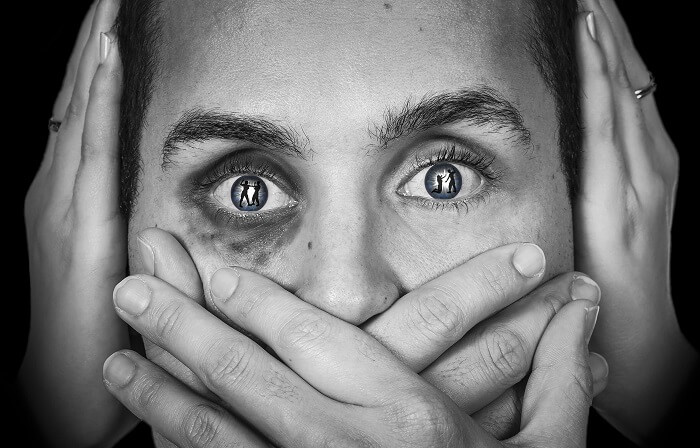
Little help is available to those suffering mistreatment in an abusive coven unless they are fortunate enough to connect with an understanding professional or others in the same situation. As a Pagan psychologist only too familiar with such damage, I developed this Coven Abuse Self-Help Index (CASHI) initially to help those in our community dealing with abusive Pagan clergy.

It has now been generalised to fit most pathways, be they Asatru, Buddhist, Celtic, Druidic, Hindu, generic Pagan, Shamanic, Wiccan or Witch. The CASHI is couched in terms of persons within an actively abusive situation, or for those previewing Covens Groves, Circles, Kindreds, Organizations etc. This Index also works well for those choosing individual apprenticeships, serial workshops or longer training situations of a metaphysical or “New Age” nature. Use of the CASHI will hopefully aid novices and others in avoiding common abusive situations that occur in such working groups. I spun the framework of this tool from the main concepts of Issac Bonewits venerable A Bonewits Cult Danger Evaluation Frame which is sometimes a bit confusing to novices as yet unfamiliar with the Pagan milieu. The CASHI was formulated to assist persons new to the metaphysical community and only marginally familiar with psychology in recognizing situations of coven and other organizational abuse. It is also quite suitable for persons at more advanced levels of tenure who may suddenly find themselves in an untenable situation within their group…

Coven Abuse Reality Check
If you are depressed, ill, stressed-out or otherwise in a negative space, take some time out to take a very long hard look at your own situation, motives, attitudes and actions before seeking to place the blame on others. Communication is a two-way street. Are you sure you are effectively communicating your needs to your covenmates and coven leadership? What about your negative perceptions? The worst thing to do is hoard up perceived slights then dump them on an unsuspecting populace. Be a good communicator and honestly discuss your ongoing perceptions with your fellow covenmates and Leadership when necessary. When deciding whether your ill feelings about the Coven stem from your own problems or those of other coveners or Leadership, factor in your own stress levels, emotional life and relative fulfillment level. Even lack of proper diet and exercise can affect your judgment and decision-making capabilities. Make sure you stand as much in Balance as possible before applying the CASHI.

1) Do the Leader/s, Priest/esses or other significant members of the Coven isolate you from people you care about inside or outside of the Coven?

(a) Is there an attempt to isolate you from family or from friends that you had prior to entering the coven?(b) Is there significant factionalism within the coven? Sub-groups that others in the coven point to and suggest or demand you not associate with? One or two persons in the coven that everyone else dislikes but nothing is done about?(c) Is there an “approved list” and/or a “disapproved list” of people, institutions and ideals you should or should not associate with or espouse? 
2) Do the Leader/s or Priest/esses of the Coven levy Coven taxes, dues or “membership fees” in excess of what might be reasonable for photocopying, refreshments served at meetings, and separate from any monies collected upon agreement of the entire Coven?

(a) Do they monitor your finances in any way or demand payments in any form for his/her/their services or “protection”?(b) Do the Leader/s, Priest/esses or other significant members of the Coven behave honorably with regard to their own money and personal possessions? Other people’s money and possessions? 
3) Do the Leader/s, Priest/esses or other significant members of the Coven have repetitive difficulties handling their daily affairs? Are they constantly in crisis, on the edge, depressed, ill, in debt, having family or legal problems, being evicted, etc? Some of this can be chalked up to reasonable “learning experiences” in a spiritual leader’s life journey. Beware of this syndrome if the following occurs:

(a) Are you or others frequently asked to help clean up this person’s life? Constantly being asked to babysit their children while they firefight? Emergency calls to help run them to shop or on other errands not connected with Coven activities? Loan them money?(b) Do the coven leaders or other significant members seem obsessed with cursing or hexing others? Do they blame everything wrong about their lives on others, particularly on spells or hexes they feel they might be under themselves? Are they constantly accusing others of attack, personal or magickal? Are they reliably melodramatic about the supposed threats they are under? 
4) Do the Leader/s, Priest/esses or other significant members of the Coven make a habit of embarrassing or invalidating you or others?

(a) If “yes” to the above, notice with whom and where this happens. In front of other Coveners only? In front of those outside or not connected with the Coven? In secret, just to you, not in front of anyone else?(b) Have you or anyone else become a “coven scapegoat” – a person that is habitually held up to scorn and criticism? Does that person in your estimation deserve the scorn heaped upon them?(c) Are they impeccable with their word or do their words and actions often seem dissonant? Does gossip about yourself or others come back to you, allegedly from Coven leadership? Alternatively, do Coven leaders constantly tell you you have faults because they allegedly hear about them from others? Do they “use” this information against you in any way?(d) Do they “use” other people’s alleged information against you as a substitute for taking a stand themselves or instead of responsibly making you aware of their own perceptions? Do they blame you for things based on the opinions of others they cite without bothering to hear your side of the story? Are you allowed to tell your side and is it responsibly taken into account by the Leader/s, Priest/esses and other significant members of the Coven?
5) Do the Leader/s, Priest/esses or other significant members of the Coven use invalidation and intimidation to make you or others coven members behave as they want?

(a) Do they force you or others to do what you don’t want to do Mentally? Spiritually? Physically?(b) Do they not listen to you when you tell them of your discomfort in forced situations? Do they make fun of your discomfort or constantly chalk it up to a lack of spiritual development on your part?c) Are things like coven secrets, levels of initiation or other information or elevation held over your head to get you to behave the way the Leader/s, Priest/esses or other significant members of the Coven want you to? 
6) Do the Leader/s, Priest/esses or other significant members of the Coven advocate or threaten you or others with violence of any kind?

(a) Have they threatened you or others with physical violence? When? Under what circumstances?(b) Do they treat you/others roughly, or touch you inappropriately?(c) Do they refuse to back off when asked? Do they use excuses for their violent behavior?(d) Do they threaten you or others with spiritual violence or psychic attack? How did you perceive this? (eg; did you perceive it psychically, were you told by the Leader/s, did the alleged victim tell you, etc?)
7) Do others collude with the main Abuser/s in their hurtful behaviors?

(a) How are those persons connected with the Coven? Is there cliquishness involved?(b) How differently are persons inside and outside inner and intra-Coven cliques treated?8) Do the Leader/s, Priest/esses or other significant members of the Coven make you feel miserable, as if there were no way out of your situation in the Coven? Have they told or intimated to you that you will be in this Coven “for life”?(a) Do they forbid you to investigate other covens or to talk to people from other covens or organizations?
(b) Are you encouraged to keep silent about behaviors you witness in coven? Not necessarily oathbound coven secrets which are normal to remain silent about, but about how people treat one another? How interpersonal interactions affect others?9) Are the Leader/s, Priest/esses or other significant members of the Coven frequently angry for seemingly no reason?
(a) Is there one person that always seems to receive the brunt of the Leader/s anger? (Reference 4b, above)
(b) In your opinion has that person done anything to warrant such angry treatment?
10) Do the Leader/s, Priest/esses or other significant members of the Coven exhibit disbelief when you or others confront them with their bizarre behavior?
(a) Do they blame you or others for abuses they have perpetrated on you? (eg; “You made me do it.”)
(b) Do they use “projection” – accusing you or others of perpetrating the same abuses they themselves have perpetrated while staunchly denying their own culpability?

(c) Do they constantly point to “misunderstandings”, yours or others supposed “lack of spiritual growth”, a malignant juxtaposition of the stars or other seemingly thin excuses for their own behavior?

11) Do the Leader/s, Priest/esses or other significant members of the Coven use altered states (including those induced by alcohol or drugs) as an excuse for being abusive?
(a) Do the Leader/s, Priest/esses or other significant members of the Coven engage in abusive behaviors while possessed of Deity/Spirit or in the trance state? If so, is this a solo effort on the part of one or two? A concerted effort on the part of many?
(b) Do they blame Spirit, Deity or drugs for their abusive behavior? Eg; “The God/dess made me do it” -or- “It was the God/dess, not me” -or- “That’s the booze talking, not me.” etc.

12) Do any of the Leader/s, Priest/esses or other significant members of the Coven appear to have a “Jekyll and Hyde” personality? Do they exhibit sudden mood swings, unpredictable behavior and markedly contrasting modes of personal conduct over a period of time that you can recognize as cyclic or patterned behavior? (a) Do you experience incidents of benevolence then sudden violence? Kindness then rage experienced over a significant time period?
(b) Does said person often seem not to know what you are talking about when you refer to past conversation? Do they claim they never said what you know they did? Do they claim you never told them things that you know you did?

13) Are the Leader/s, Priest/esses or other significant members of the Coven hypersensitive to any form of criticism? Do they allow and encourage appropriate constructive criticism? Do they quash any inkling of an idea that they are in any way lacking or behaving abnormally?

(a) Opposite to quashing criticism, do they seem not to know what to do with it? Do they fence-ride on issues of interest and relevance? Is the Leader’s style of management wishy-washy and poorly defined? Do they seem not to want to hurt anyone by giving opinion? Do they have a recognizable set of values or do they go with whatever others in the group want?
14) How do the Leader/s, Priest/esses or other significant members of the Coven relate to children, animals and the disabled? Are they fair in their treatment of children? Of animals? The physically disabled or mentally challenged? Do they hurt, treat carelessly or advocate the hurting of any of these groups?
(a) How do the Leader/s, Priest/esses or other significant members of the Coven feel with regard to persons of different races or sexual orientations than themselves? Do they advocate treating such persons differently than others?

at August 23, 2019 0 comments  

it’s all in the wrist – some wand basics


It’s All In The Wrist – Some Wand Basics
Author: Bronwen Forbes
Posted: February 14th. 2010 via Witchvox.com

After the athame, the most popular – and misunderstood – ritual tool is the wand. Aside from the “is the wand a tool of the East or a tool of the South?” debate I covered in my Witchvox article on athame basics, there seem to still be quite a few unanswered questions about the wand and its use including: Is it better to make or buy a wand? How long should my wand be? What should I make my wand out of? When should I use the wand in ritual, as opposed to using the athame? How do I charge my wand and make it ready to use? Is it better to make or buy a wand? In general, it is always better to make a ritual tool than buy it. Obviously, unless you have a forge and the training to make your own blade from scratch, it’s better to buy an athame rather than make it. Plus, wands made by other people can be *expensive.* I remember a few years back with wands made of wood that had a natural spiral twist to it from growing with a wild grape vine wrapped around it were being sold for about $60. If the seller added a shell or crystal at the tip, the naturally spiral wands were closer to $70. I remember talking to a friend who was Pagan and also participated in “Host Your Own Murder Mystery” events.

 She had just returned from a murder mystery convention and was telling me about the weird stuff that the attendees bought to make their weekend events more realistic (fake blood and cap guns were only the tip of the iceberg) – and how much they paid for it. I said, “Yes, but Pagans have been known to pay $70 for a stick!” She laughed, but she also had to agree with me. How long should my wand be? Traditionally, your wand should be exactly the length from the inside of your elbow to the tip of your middle finger. No more, no less, and *never* “trim” your already-made wand to fit in the fancy storage box your sweetie gave you for Yule (seriously, I know someone this happened to) .

However, it’s been my experience that if two people are working partners and only one of them has a wand, the other can generally use the wand even if it’s traditionally the “wrong” length. What should I make my wand out of? Wands can be pretty easy to make. All you need is a short, cured wooden branch, or, if you want to go fancy, find your own “stick” that has wild grapevine growing around it. Take home, strip the bark off, and polish. I had a student once who wanted more than anything to be a music conductor. Her wand was, in fact, a conductor’s baton. I thought it was perfect for her. I’ve also known people who have used bones from their totem animals (deer bones work very well, if you can get them) rather than wood. They seemed to work well, too. My husband has a lovely wand he “recycled” from a red maple tree that needed to be cut down in his mother’s front yard a few years ago.

To give him an even closer connection with his wand, he and his father were the ones that planted the tree in the first place. If I ever have a wand, it will probably be made of oak, holly or apple – my favorite trees. A quick note to the Harry Potter fans: no, it will not have a phoenix feather in the middle of it! You can decorate your wand with shells, crystals, feathers, paint, carve runes into it – whatever makes it more “yours.” However, I would reference the excellent article Lupa posted here on Witchvox about the legal use of animal parts for ritual items before adding feathers or bits of fur to the end, or even making the wand out of bone as mentioned above.

The last thing you want is to take your wand to a public space to use for a community ritual and have it confiscated by the police or park rangers because you’ve put a feather on it that, legally, you’re not allowed to have. When should I use the wand in ritual, as opposed to using the athame? You can, generally, use the wand for anything you’d use the athame for –casting the circle, saluting the quarters, etc. If you believe the wand is the tool of the East, use it any time you need extra “air” energy – when you’re doing a ritual to help you study more effectively for an exam, for instance, or when beginning a new job. If you believe the wand is the tool of the South, use it any time you need extra “fire” energy – if you’ve been feeling physically run down lately, or you’ve got some old life baggage you want to burn away.

If your wand is made of wood, I’d definitely refrain from placing it in a combustible situation – using it to consecrate a burning candle, or poking your incense charcoal to get the burnt ash off the surface and expose the glowing coal within, for instance. Use your athame or boline for those – and save yourself the pain and embarrassment of setting your wand on fire! How do I charge my wand and make it ready to use? I keep my wand tucked away with the rest of my altar tools (I have a small child and many pets. Ritual tools are safely stored in a special cabinet) . To charge it, I waited for a particularly windy day (yes, I am definitely of the belief that wands are the tool of East/Air) and took my wand outside for a few hours so it could absorb the wind. I also did this as close to sunrise as possible to add the dawn/new beginnings energy to the tool. I still do this periodically if I haven’t used it in ritual for a while – just in case. Whether your wand is something you make yourself or a gift from a dear friend, cherish it and use it well!

at August 23, 2019 0 comments  

the healing power of trees


Author: Colin Bondi
Original Site: witchvox.com

I love trees, I always have. I love the natural world but for some reason trees have always had a special meaning and a special power for me. The reverence and appreciation I feel for them can be intense and lately I’ve made it a daily practice to connect and work with them. They are a great teacher for me and they demonstrate and symbolize how to live in the world with grace, groundedness, openness and connectedness. They help me move energy by connecting me with the Earth and acting as a channel for its energy.

They comfort me when I’m feeling lost and help me get to my feelings. They provide a natural temple to connect with Spirit, the Goddess and the power of the Earth. Its really too bad they aren’t appreciated more for what they have to offer people as well as what we can do for them because I think we are meant to work together.

Trees are an amazing spiritual symbol and they represent grounded connected life very well. If we consider how a tree exists this becomes clear. A tree is dependent on the world around it, it needs light, water, air and soil to grow and prosper. Yet if a tree is to survive it must put down strong roots deep into the ground while reaching up into the sky to the sun so it must be grounded in the Earth while open to the sky. If it is not well grounded a strong wind can topple it or even blow it away but if well grounded a tree can and must withstand storms and the tumult of the outside world. It must also be flexible so as not to break in the wind, a balance of strong grounding and flexibility.

Humans too must be well grounded in themselves, the Earth and in Spirit if they are to withstand the trials of life. If we are not well grounded we tend to be swept up in the circumstances and emotional drama of our lives and this is particularly true in these intense times. However if we are well grounded, we find our stability within and we are not swept away even in the most difficult of times. Like the tree we must also be flexible and not be so rigid in our groundedness that we snap. We flow with the changing current of life without being overwhelmed by it. Being grounded and flexible is what trees symbolize for me.

The tree has also been used by many cultures as a powerful symbol, an example of which is the Tree of Life. Here the tree is used to symbolize life itself in all its complexities and interconnections. A similar concept is that of the World Tree where the tree is used as a cosmological symbol of the underworld, the Earth and the Heavens.

Trees can be powerful healing tools because they can help us ground and move emotional energy very effectively. When I’ve felt stuck in my “stuff” lately I’ve taken a trip to the park to do tree practice. I’ll find a strong tree I feel drawn to and touch it with both hands while planting my feet firmly on the ground next to it. I will then ask the tree for help in moving my stuck energy.

If it feels right to continue I visualize energy from the earth coming up through my feet and into me and flowing out through my hands into the tree and back into the earth creating a circuit. The tree has a way of helping me make this connection and moving the energy. I usually find emotion comes up rather easily when I do this… whether it be sadness, anger or some other feeling I had been holding onto. Once energy has moved I will quiet my mind and feel the energy of the tree and the earth, which is very calming. I conclude by giving the tree my gratitude and sending it love and light.

I think this practice is a powerful one because we can be so disconnected from nature in our modern world yet we are a product of nature. I wonder how much of our mental and emotional pain is made so much worse because we have lost this natural connection that is so healing. The drama and trauma of human life tends to obstruct life energy so it becomes things like depression, anxiety, anger and confusion. To Mother Nature this is all just life energy and so in reconnecting with her she can help us remove the obstructions and free this energy returning it to source while allowing it to flow through us in a way that allows us to live fully connected with life.

In the sacred rites and rituals of old, particularly the Druids, trees represented the place of spiritual worship, the sacred grove. They became a temple to the Divine. I have come to see it that way myself and consider the park near my house a temple and place of spiritual practice. The paths are the sacred halls of the temple and the trees living manifestations of the Goddess as well as access points to the Earth energy we are all a part of.

Reconnecting with the Earth in this way is not only healing for us but for the planet as well. If we can return all the disconnected energy we have created in separation, that energy can be used consciously to heal the planet. The environmental crisis we are experiencing today is a manifestation of this separation. In seeing ourselves as separate from the planet we have harmed it greatly while not realizing we are directly harming ourselves at the same time.

Is it any wonder our culture is so sick and dysfunctional? We are not separate from the planet; we are a conscious part of it and with our consciousness acting in harmony with the planet, it and we can be completely healed together. Technology, science and rational solutions will not save us because the problem is much more simple and basic than that and the solution is right here right now if we can just let go, listen, feel and realize our interconnectedness.

at August 23, 2019 0 comments  

the fine act of knowing when not to speak


Many times people will call and ask me questions. Never really looking for an answer, just wanting to voice what they have on their minds, and looking for little to no interaction with the person on the other end of the line.
This is  a masterful skill that not many have, as most have mouths bigger than the state of Texas, and ears as small as a needle point. I have over many years of practice learned this fine art. I know that my shoulder is sometimes a pillow for others to cry on, and my ears are just there to absorb what others have to say. Though I may be a person of few words, it is at this time of silence that I am taking in more than you could ever imagine. Yes my expression may glaze over and it not seem like im listening but many times I am forming my own rebuttal to what is being said to me.

I guess what the meaning of this post is supposed to be is this. Sometimes you need to listen and not speak. Sometimes others dont need your view point, and even though you do not agree with something, dont knock it as its not your place. If someone asks your opinion do not beat them over the head with it simply say ‘i feel this way________, but I support your choice to do _______” one of my most favorite things to tell people is this :

                      “I really dont agree with that choice, however, I am always going to be right here for you, good, bad, or indifferent. Just note that I reserve the right to say ‘Ha ha I told you so…””

This lets others make their own decision and that way should they fail in what they were indecisive on they can not come back and said ‘well i did what you said now look at where I am!” Because you only offered up your view point, you didnt give them the idea, you merely suggested how you would do something.

Remember words are powerful weapons, and better than doctors, when used correctly.

at August 23, 2019 0 comments  

can having too much in common become a problem


Perhaps being with somebody who is like you in every way can become a hindrance in making a relationship work, because of its tendency to impede growth and to foster narcissism in an individual.

Having said this, there might be some truth to the saying that opposites attract. There’s nothing entirely wrong with having the same taste in movies, travel destinations, books and perspectives on life. It’s when things go overboard that this “commonality” starts to become a burden. Here are some examples of how this can be made possible:

Lack of space. It’s OK to have activities that you engage in together, like if you do wall climbing, painting classes or backpack traveling. However, this can become an issue if your daily activities are constantly in sync with each other. Being together ALL THE TIME can be unhealthy as well, since one of you is bound to feel suffocated and get on the other’s nerves.

Shrinking your worlds. Since the two of you are constantly together, your worlds are bound to shrink as well. Your relationships with people outside your “sphere of love” deteriorates, you keep cancelling on your appointments with people and you no longer do the things that you used to, simply because your partner isn’t in on it (it might also be because they disapprove of it). Don’t allow this to happen, because it will transform your world into one that revolves around your partner, and this could become a bad thing down the line, especially when they start feeling that you’re constantly breathing down their necks. This is also the cause for the start of insecurity, discontent and to some extreme degree, contempt.

Letting your narcissism get in the way. Making any relationship work requires a constant need for understanding and the ability to be compassionate and considerate towards your partner. Having too much in common with your partner might be misleading on your part, as you might make the mistake of thinking that his or her needs are just the same as yours. Thus, defeating the purpose of making an effort to know your partner better or making an effort to make things work.

Having a lot in common with your partner can’t all be that bad. In fact, it may even be an upside to some, because they find that they understand each other better. Like in every relationship, understanding and consideration may be one of the more important factors to making sure that both your needs are met. The most rewarding of relationships, after all, are that which inspire you to grow individually. Don’t let these “commonality issues” be the reason for your downfall.

at August 23, 2019 0 comments  

Newer Posts Older Posts Home
Subscribe to: Posts (Atom)